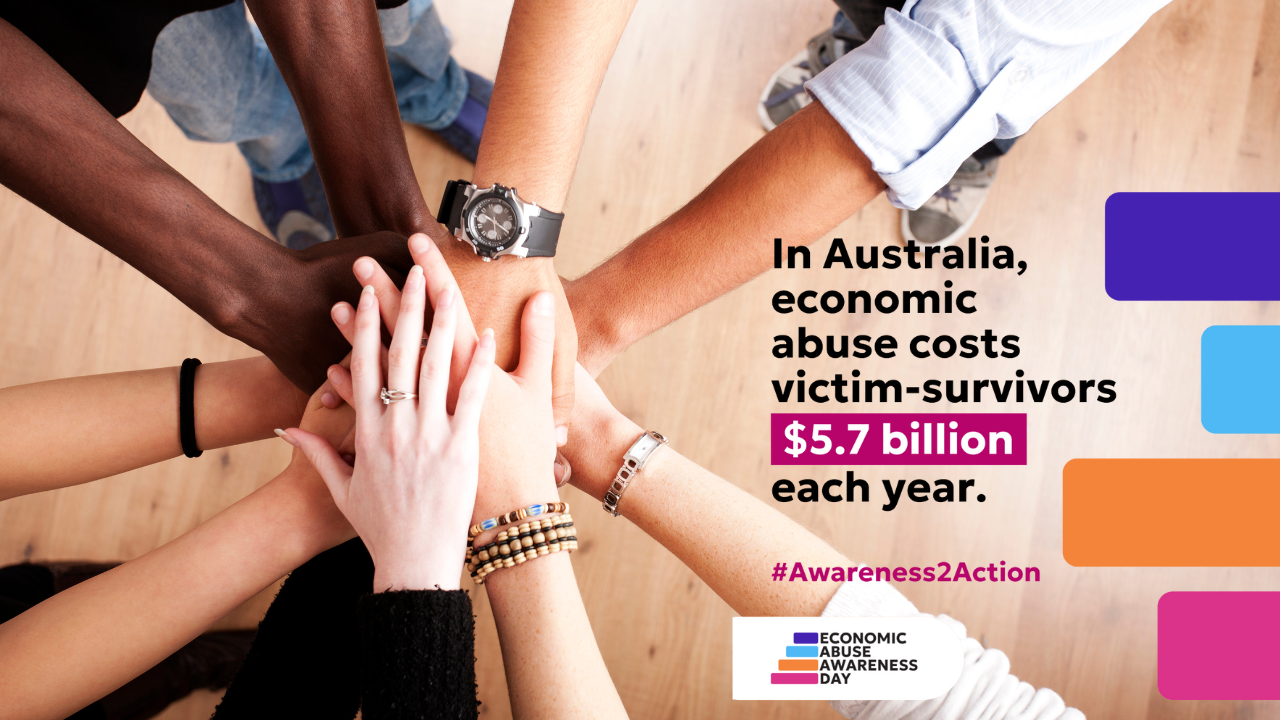
Each year on 26 November, communities across Australia and beyond observe Economic Abuse Awareness Day. This day is dedicated to recognise, talk about and act against a hidden but devastating form of domestic and family violence.
Economic abuse often leads people to seek financial counselling and sometimes, it’s the first step toward safety, stability and reclaiming financial independence.
What Is Economic Abuse?
Also described as financial abuse, it occurs when one partner uses money or economic resources to control, manipulate, or limit the other’s ability to be financially independent.
This can look like:
- Controlling access to household money or bank accounts.
- Preventing a partner from working or studying.
- Making large financial decisions without consent.
- Incurring debt in the victim’s name.
- Selling or destroying property or assets.
It’s important to note, it is not always loud or visible and can be hard to detect as it can be interconnected with other forms of coercive control or domestic violence.
Because financial safety underpins wider safety, autonomy and opportunity, economic abuse often keeps people in harmful relationships, long after physical abuse may have ended.
The Extent of the Problem in Australia
Recent surveys show that economic abuse is a common experience in Australia. According to the latest data from the Australian Bureau of Statistics (ABS), 16 % of women (about 1.6 million) and 7.8 % of men reported having experienced economic abuse by a partner since age 15.
That means roughly 1 in 6 women in Australia have faced economic abuse.
While the numbers are significant, cases can go unnoticed due to either not knowing what it is, or people not knowing what support is available. Having an awareness day is helping to increase overall community awareness and support for victims and survivors.
Why FCAN Supports Economic Abuse Awareness Day
At FCAN, our Financial Counselling members support people facing financial hardship every day. Economic abuse can be one of the causes of financial distress. This being the case, it is important to help raise awareness of what economic abuse is so that those experiencing it can get the help they need.
By raising awareness, we hope to:
- Empower individuals experiencing abuse to recognise it and seek help.
- Encourage financial counsellors and community workers to be alert to signs, even when debt or hardship “just looks like money problems.”
- Strengthen coordination between financial counselling services, family-violence support services, legal services and social support networks.
- Advocate for structural reforms to protect economic rights and improve safety and recovery pathways for survivors.
What Can You Do: From Awareness to Action
Here are some ways individuals, communities and services can support survivors of economic abuse:
- Educate yourself and others. Learn what economic abuse looks like, it’s often subtle and may coexist with other forms of abuse.
- Listen and believe. If someone discloses financial control, coercion or unexplained debt, take them seriously and offer non-judgmental support.
- Refer to financial counselling. Encourage individuals to reach out to qualified financial counsellors for help assessing their financial situation and safe budgeting.
- Support systemic change. Advocate for policies and services that recognise economic abuse as part of domestic and family violence, including access to debt relief, safe housing, and legal support.
Conclusion
Economic abuse can be one of the most insidious and under-recognised forms of financial harm that people can experience. Because it strikes at the very foundation of financial security, it can take away survivors’ independence, peace of mind and the chance to thrive.
If you or someone you know is experiencing a financial crisis, or other financial pressures, please know help is available. Financial counselling is free, confidential, and can be a first step toward reclaiming financial independence and safety. Call the National Debt Helpline on 1800 007 007 to book in with a Financial Counsellor today.